
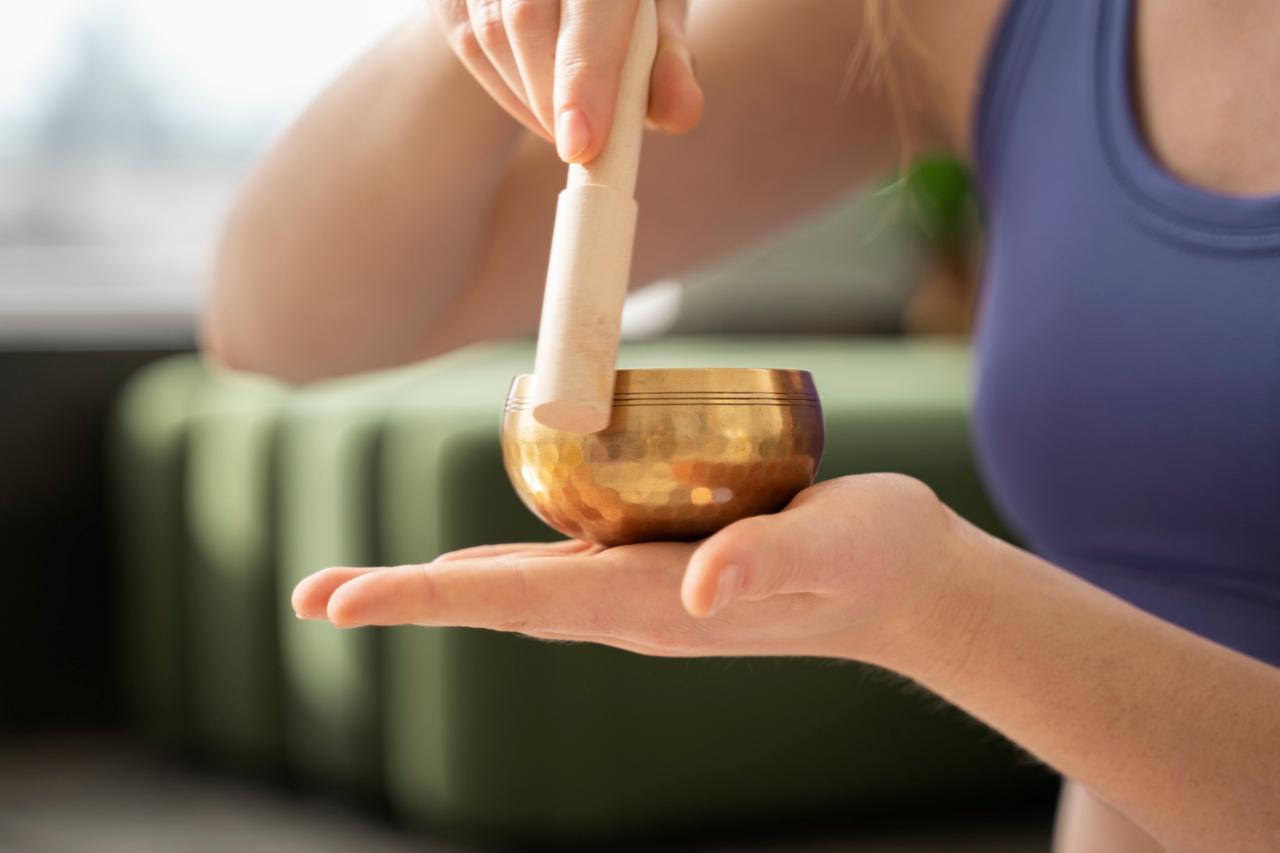
There is a moment, just after a metal bowl is struck, when the room seems to hold its breath. The tone spreads outward, thins, and then fades so gradually that you cannot say exactly when it ended. People often notice their shoulders drop somewhere in that fading. Nothing has been fixed and nothing has been achieved — and that is, oddly, the point.
The Meaning of Slow Living
Slow living is not about doing less for its own sake. It is about choosing a pace that lets you actually notice what you are doing. A slow meal, a slow walk, a slow conversation — each asks for attention rather than efficiency.
Sound turns out to be a natural entry point. You cannot rush listening. A tone unfolds in its own time, and following it to the end pulls you into a state akin to meditation. For beginners who struggle to sit still with breath alone, a sound gives the mind something easier to rest on.
Why Sound Has Been Used for Centuries
Long before wellness became a category, communities used sound to mark thresholds. Bells opened temple rituals. Drums held people together in ceremony. Chanting shaped breath into rhythm without anyone naming it a breathing technique.
Himalayan singing bowls are commonly associated with traditions across Nepal, Tibet, and parts of northern India. They have been used in different cultural and spiritual settings, including some monasteries and households, although their early history is not fully documented and many historical claims remain debated. Rather than focusing on a single origin story, it is more accurate to say that these bowls have continued to be valued across generations for a variety of practical, cultural, and meditative purposes.
How Ancient Instruments Support Modern Wellness
Walk into a yoga studio or a therapy room today and you will often hear one of these instruments at the edges of the session — opening a class, closing a savasana, marking the end of a breath work round.
They earn their place for practical reasons:
They need no electricity or screen: A bowl works during a power cut, in a garden, in a hospital waiting room.
They signal transitions clearly: A single tone tells a group to settle without the teacher raising a voice.
They give the mind an anchor: Following a tone until it disappears is a complete practice in itself.
They are portable: Tingshas fit in a bag; a small bowl fits in a hand.
Practitioners also notice that group sessions with sound feel less self-conscious than silent ones, since the sound pervades the room and nobody feels watched.
A Scientific Perspective on Sound and Relaxation
The honest position is that research here is early and modest. Small studies on sound-based sessions have reported reductions in self-reported tension and improvements in mood, but sample sizes are limited and results vary. Sound is not a treatment for any medical condition, and it should never replace professional care.
What is better understood is more general. Slow, predictable, low-frequency sound tends to encourage slower breathing, and slower breathing is well documented as part of the body’s relaxation response. Sustained attention on a single stimulus also reduces the mental scatter that keeps people wound up. In other words, the plausible mechanism is unremarkable — and that is a strength, not a weakness. You do not need an extraordinary explanation for something this simple.
Related » Thich Nhat Hanh Teaches How to Practice Conscious Breathing
Choosing Authentic Instruments
Sound quality depends heavily on how an instrument is made. It depends on the bowl’s size, shape, metal composition, craftsmanship, and how it is played. Many hand-hammered bowls are valued for their rich overtones and unique character, while machine-made bowls can offer greater consistency. Since every bowl is different, listening to the individual instrument is more important than assuming one type always sounds better.
A few things worth checking before you buy:
- Listen before deciding: Ask for an unedited recording if you cannot visit in person.
- Look for hammer marks: Visible, uneven marks suggest hand work.
- Test the sustain: A good bowl holds its tone for a long, slow fade.
- Ask where it was made and by whom: Vague answers usually mean a middleman.
Sourcing matters most for professionals buying several pieces at once. Practitioners, studios, and small retailers looking for genuine handcrafted Himalayan instruments can explore singing bowls, gongs, and tingshas available online at wholesale prices.
Practical Tips for Beginners
Start smaller than you think you need to. One bowl is enough for months of practice.
Strike it once. Listen until you cannot hear it anymore. Strike it again. Five minutes of that is a real session.
Keep the bowl on a cushion or your flat palm, not gripped in your fingers, which dampens the tone. Use the mallet’s side rather than its tip for a fuller sound. And resist the urge to collect — a second instrument rarely deepens a practice that has not found its footing with the first.
Final Thoughts
Ancient instruments may seem exotic, but the reason they fit modern wellness is because they ask of us something that we have forgotten: wait, and listen to the end. That request is small enough to accept on an ordinary weekday. Strike the bowl once, follow the sound out, and notice how much of your day you usually miss by moving faster than it.
Related » Tools and Props to Facilitate Meditation
FAQs
Do I need training to use a singing bowl at home?
No. Personal use requires no certification. Formal training becomes relevant only if you intend to offer sessions to clients.
Are handmade bowls always better than machine-made ones?
Generally they produce richer overtones, but individual bowls vary. Trust your ears over the label.
How long should a session last?
Five to fifteen minutes suits most people. Consistency matters more than duration.
 Spot an error in this article? A typo maybe? Or an incorrect source? Let us know!