
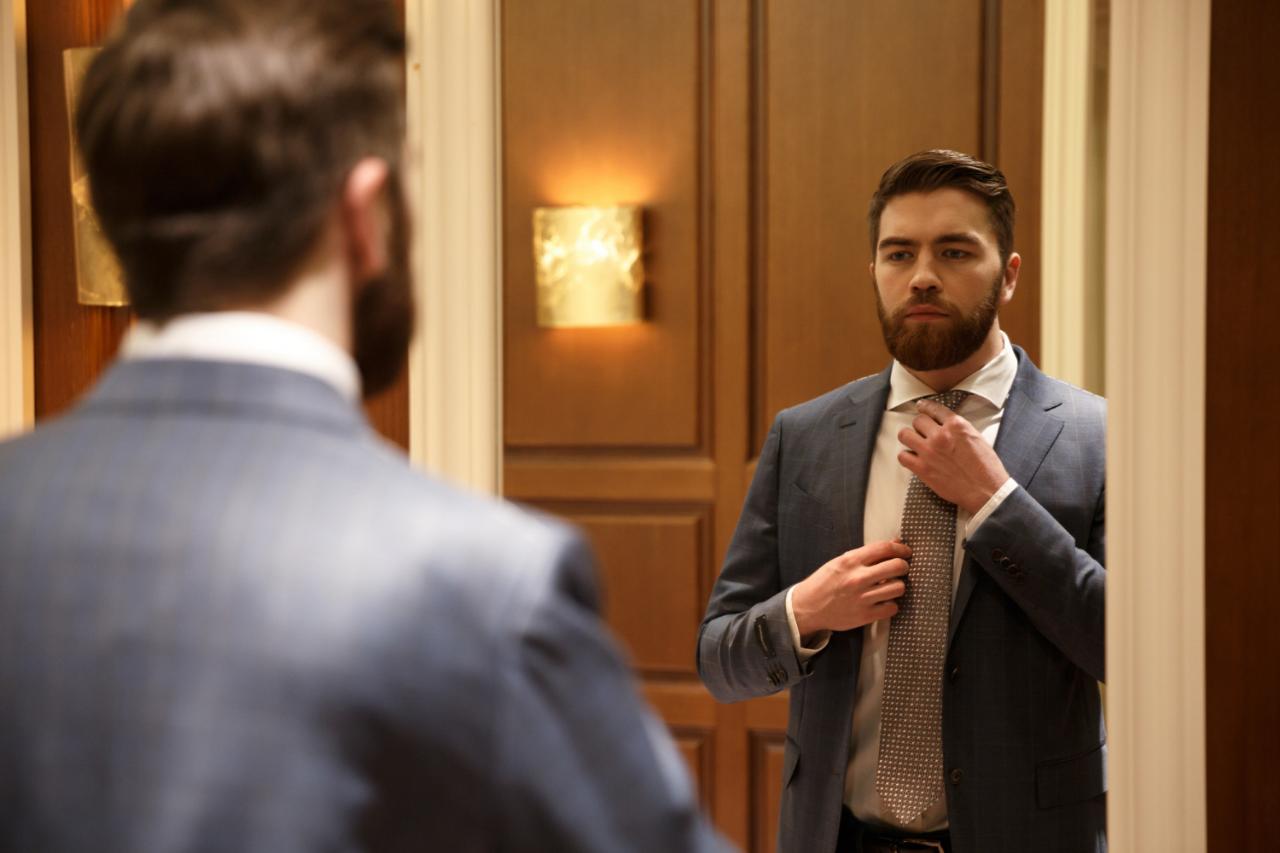
Conversations about men’s mental health tend to concentrate on the parts of life that carry the most weight. Relationships, loneliness, work, physical health, money, sleep, and knowing when to speak with a doctor or mental health counselor all deserve serious attention. Somewhere within that larger conversation, however, there is room for the smaller habits that influence how a man approaches an ordinary day.
Taking care of your appearance belongs in that category. A fresh haircut, clothes that fit, a favorite pair of shoes, or the watch you have been looking forward to wearing can provide a modest lift in confidence. Nobody should expect a cashmere sweater to resolve an existential crisis, but there is something to be said for leaving the house looking like you made an effort.
Confidence Can Start Small
Dressing well does not require a suit, an encyclopedic knowledge of Italian tailoring, or a wardrobe that needs its own insurance policy. For one man it might mean a navy blazer and loafers; another may be happiest in good denim, sneakers, and a jacket that fits him.
The useful part is the intention behind it. Choosing what to wear gives you some control over how you present yourself and can become part of preparing mentally for work, a date, dinner with friends, or any other occasion where you would prefer to arrive with a little confidence.
Psychologists have explored whether clothing can influence the wearer as well as the people looking at him. In a widely discussed 2012 study, Hajo Adam and Adam Galinsky introduced the idea of “enclothed cognition.” Their experiments suggested that both wearing an item of clothing and the meaning associated with it could affect performance on attention-related tasks. Later researchers attempting a direct replication did not find the same selective-attention effect, so the original result is better treated as an interesting line of research than a settled rule about what your jacket is doing to your brain.
Dressing Well Is Personal
Style becomes much more enjoyable once you stop treating it as a competition. A man who loves vintage Levi’s has no obligation to become interested in Savile Row, and somebody who enjoys beautifully made suits does not need to pretend he would rather spend every weekend in sweatpants.
Clothing also gives men an easy and low-risk way to explore personal taste. The choices can be subtle: a different pair of glasses, better-fitting trousers, an unusual pair of shoes, a fragrance, some jewelry, or a watch that attracts the amount of attention you want.
Research offers some support for the broader idea that what we wear can influence how we approach situations. A 2015 paper by Michael Slepian and colleagues reported across five studies that more formal clothing was associated with more abstract cognitive processing. In one of their studies, the relationship between formal clothing and abstract thinking was mediated by participants’ sense of power. That research says nothing about whether a blazer makes you happier or mentally healthier, and it points to clothing interacting with how we perceive ourselves and approach the world.
Rituals Have Their Place
There is another part of dressing well that receives less attention: the routine itself. Shaving before an important meeting, polishing a pair of shoes, choosing a fragrance, or deciding what to wear the following morning gives an ordinary day a little structure.
For men whose working lives happen through screens, those tactile routines offer a welcome change. You are dealing with fabric, leather, metal, buttons, laces, and objects that exist somewhere other than a browser tab.
The same applies to exercise, cooking, woodworking, collecting, gardening, or any number of other hobbies. Having interests that reward attention and participation can give the week some shape, and personal style can take up a small place among them. For many men, a watch combines the daily ritual with a lasting personal meaning.
Why Watches Become Personal
Watches tend to develop more sentimental baggage than most accessories. People buy them for graduations, promotions, weddings, important birthdays, business milestones, and other occasions they want to remember. Some watches eventually pass to children or grandchildren, which gives an object purchased decades earlier a meaning its original owner could not have anticipated.
Mechanical watches also invite interaction. You might wind one before putting it on, set the date after leaving it in the box for a week, swap a leather strap, or spend an embarrassing amount of time admiring the movement through the caseback when you had meant to check the time.
Collectors develop different tastes, which is part of the fun. Someone may celebrate a career milestone with a Rolex Submariner because he has wanted one since he was twenty-five. Another collector might spend years hunting for a particular reference among A. Lange & Söhne pre-owned watches because German movement architecture and hand finishing fascinate him, and the pleasure of either choice comes partly from knowing why you made it.
Buying the Watch You Wanted
Luxury watches can also serve as markers of personal achievement. Provided the purchase fits your finances, there is nothing frivolous about rewarding yourself with something you have wanted for years.
The pre-owned market adds interest because it removes the need to choose from the current catalog. Someone looking at pre-owned Patek Philippe watches can explore decades of different references, sizes, movements, dial configurations, and metals. The search itself becomes part of collecting.
The Calatrava suits the subject of personal confidence because so much of its appeal depends on restraint. A Ref. 5196 measures approximately 37mm and carries little visual excess, while the newer 39mm Ref. 6119 introduces the more decorative Clous de Paris bezel without turning the watch into something that announces its price across the room. A man who wears either one has chosen it because he appreciates what it is, which is a pleasant form of confidence.
Style Has Its Limits
There is an obvious boundary to all of this. Taking pride in your appearance can be enjoyable, and research suggests that clothing can interact with self-perception and cognition in interesting ways. Serious mental health concerns still deserve more than a wardrobe upgrade.
Depression, anxiety, persistent loneliness, substance use, or a prolonged sense that something is wrong are reasons to talk with someone who can help. That could mean a trusted friend or family member, your doctor, a therapist, or a mental health counselor depending on what you are dealing with.
Taking care of yourself can include both. You can enjoy getting dressed, exercise regularly, collect beautiful watches, spend time with friends, and still ask for professional support when life becomes difficult.
Related » Is there a stranger in your closet?
Dress for Your Own Life
Personal style works best when it belongs to the person wearing it. Clothes can help you prepare for an occasion and express some personality, and they can let you walk into a room knowing that you have presented yourself the way you intended.
Sometimes that confidence comes from a well-fitted jacket. Or, it might come from replacing the shoes you have been pretending are still presentable. For a watch collector, it could come from fastening the Calatrava he bought after reaching a goal that once seemed far away.
These pleasures are modest, and the claims made for them should stay modest too. Still, taking care over how you present yourself can be part of a wider habit of self-care, and a man does not need to apologize for enjoying the ritual.
Also Read » Does the Idea of Standing Out Excite You or Terrorize You?
 Spot an error in this article? A typo maybe? Or an incorrect source? Let us know!