
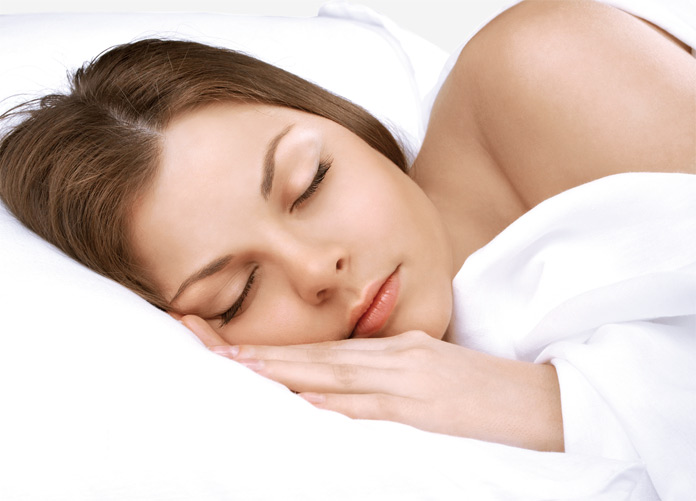
Our ancient ancestors viewed sleep as a mysterious, inert state that somehow played a role in survival. For them, sleep also made practical sense as a way to recuperate from fatigue and avoid night-time dangers like being eaten by predators or falling off cliffs. Researchers are just beginning to fully understand the complexities of our sleeping selves and its powerful impact on our waking lives.
Why we sleep
We sleep for two reasons: First, our bodies run in cycles called circadian rhythms, of which the sleep cycle is one. Many of these cycles, such as heartbeat, blood pressure, respiration, metabolism and temperature, drop or slow down during the sleep cycle. Mission control for all these processes is a part of the midbrain called the suprachiasmatic nucleus. This is where your master body clock is located. If this nucleus is damaged or removed, you end up taking lots of short naps instead of one long sleep period.
Your circadian rhythms are set by various time cues called zeitgebers. Light is the most powerful zeitgeber that affects sleep. Daylight wakes you up and darkness triggers the release of the hormone melatonin that brings on sleep. Noise and temperature also play key roles in the regulation of your sleep schedule.
The second reason we sleep is because the longer we’re awake, the greater our need for mental and physical restoration. It takes one hour of sleep to pay for every two hours of wakefulness. So we start to tire after being up for about 16 hours. Sleep debt is cumulative, which means the longer you deprive yourself of rest, the more you’ll need it to feel rested. How drowsy or alert you are depends on both your circadian rhythms and your sleep debt.
While you are sleeping…
Given that we spend [or should] spend one-third of our lives sleeping, it’s alarming how little we know about our down time. Does it surprise you that 40 per cent of laypersons and physicians think the brain shuts down and takes rest when we fall asleep? Many people believe that soon after going to bed they drift into deep sleep, remain there for some time, have an occasional dream, and then awaken for the new day. Actually, there are several stages of sleep, each marked by significant physiological changes.
The night is divided into non-REM [non-rapid eye movement] and REM [rapid eye movement] sleep. REM sleep is the period in which most dreams take place. Non-REM is also referred to as ‘slow-wave’ sleep and is subdivided into several stages, earmarked by different brainwaves and purposes.
Non-REM sleep
As you close your eyes, your brainwaves become slower and more regular. This stage is akin to meditation. Next is the Stage 1 period, which lasts for about five minutes as your breathing slows and your large muscles begin to relax.
The transition to Stage 2 is sometimes marked by a fleeting sensation of falling, causing you to wake momentarily with a jerk [not referring to your spouse]. During this period, you disengage from the environment and become blissfully unaware of any outside stimuli. Researchers believe Stage 2 is the beginning of actual sleep. It’s marked by spikes in brainwave activity called sleep spindles and K-complexes, which interrupt those previously regular waves. Stage 2 lasts 10 – 25 minutes, but you’ll return to it several times before daybreak, accounting for half of your night’s slumber.
Next comes Stage 3 sleep, which is characterised by slow brainwaves called theta waves. These are interspersed by even slower delta waves. You’ll spend just a half-hour here, but eventually it will comprise up to 20 per cent of your total night’s sleep.
When the theta waves disappear, you enter stage 4. This is the deepest sleep stage, which consists totally of delta waves. On your initial visit it lasts for 30 – 40 minutes. If aroused during Stage 4, you’ll feel groggy and disoriented. During this stage, blood pressure drops, respiration slows and blood flow to your muscles decreases. The secretion of growth hormone by the pituitary gland also peaks, stimulating body development and tissue repair. That’s why uninterrupted deep sleep of significant duration is especially critical for children and adolescents. And it’s also why we sleep more when we’re sick. So in Stage 4, you’re completely unaware of your surroundings and at your most vulnerable. It’s the closest humans get to hibernation.
Sleep well
To keep wide awake and energetic all day long, follow these sleep strategies:
- Be sure you meet your sleep requirement every night, which for most adults is between 7.5 and 8.5 hours every night.
- Reduce stress in your life.
- Establish a regular sleep/wake schedule, by going to bed and rising at the same time every night and day, including the weekends.
- Get one long block of nocturnal sleep, not a few hours at a time spread through the 24 hourday, and make up for lost sleep as soon as possible.
- Exercise daily, but not within three hours of bedtime. The best time to exercise is between 5 and 7pm, not early in the morning or late at night.
- Keep mentally active.
- Eat a proper diet.
- Stop smoking.
- Do not drink caffeinated beverages after 2pm.
- Avoid alcohol within three hours of bedtime.
- Take a warm bath before bed.
- Maintain a relaxing atmosphere in the bedroom.
- Establish a regular bedtime ritual.
- Avoid trying too hard to get to sleep.
- Limit your time in bed to when you are sleepy.
- Learn to value sleep. Sleep is a necessity, not a luxury.
If you have insomnia for more than three weeks at a time, consult a sleep specialist.
REM sleep
After 30 – 40 minutes of Stage 4 sleep, you re-trace your steps through Stages 3 and 2. You’ve now been asleep for about 90 – 100 minutes. Then something astonishing happens: Instead of going back into Stage 1 or ‘twilight’ sleep, your sympathetic nervous system becomes more active than it is in slow-wave sleep or even when awake. Blood flow to the brain, respiration, pulse rate, blood pressure and body temperature all increase. Your eyes dart back and forth under their lids, and you enter the highly active stage of REM sleep.
Here, messages from the brain’s motor cortex are blocked at the brainstem. As a result, muscles relax, and you’re unable to move. That’s why REM sleepers are described as having “an active brain in a paralysed body.” It’s during the first part of REM that you experience your first dream of the night. Just like clockwork [because, in fact, this entire system is run by your biological clock], you enter REM sleep every 90 minutes throughout the night. When you’re sleeping adequately, you visit it 4 – 5 times, with each REM period being twice as long as the last. This is why your final few hours of rest are so important; they’re almost entirely REM sleep. If you’re asleep for eight hours, you’ll have spent between one-and-a-half to two hours of the night in REM.
Although dreaming can occur in all stages, about 85 per cent takes place here. REM dreams are usually the most vivid and emotional. But REM just isn’t about dreaming. The previous day’s events are solidified into permanent memory traces, and sequences of learned skills [like a new golf swing] become muscle memories in this stage.
To be wide awake, energetic, psychologically, emotionally and physiologically at your best, you must play every movement of the symphony of the night. The problem is many of us never get beyond Stage 2 sleep, due to stress, ageing or medications taken for other medical problems such as rheumatoid arthritis, hypertension or type-2 diabetes.
If you don’t sleep…

Adequate sleep is essential for performance and general health. There’s no escaping the debilitating effects of insidious sleepiness, no matter how motivated, responsible or strong you are.
Physical effects
Not sleeping makes you prone to…
- Wrinkles: Sufficient sleep is required to maintain good skin texture and a healthy glow. The first area of skin to be effected by a lack of sleep is the eyelids. The skin is very thin here, so lack of sleep causes puffy eye bags, fine lines, and dark circles. In the long term, lack of sleep causes the skin to age faster leading to wrinkles, poor texture, and discoloration much earlier in life than in well-rested individuals. During sleep, the body metabolises free radicals that accelerate ageing and cancerous growths. Without sufficient sleep, more free radicals are present in the skin leading to poor skin quality and even skin cancer. Sustained sleep deprivation impairs host defence. So, if the skin is exposed to bacteria or is healing from a lesion, lack of sleep will increase the amount of healing time required and may result in more severe bacterial skin infections.
- Daytime drowsiness: This usually manifests itself as a temporary drop in energy and alertness around mid-afternoon. It’s accompanied by feelings of inattentiveness and grogginess, particularly when doing dull or repetitive tasks. It’s more likely to occur after a heavy meal or a low dose of alcohol, or while sitting in a warm room, listening to a boring lecture, or participating in a dull meeting. These factors do not cause sleepiness; they simply unmask the physiological fatigue that’s already present.
- Microsleeps: These are brief episodes of sleep that you’re unaware of and that occur during waking hours. Lasting only a few seconds, microsleeps can produce inattention, resulting in accidents and injury.
- Sleep seizures: These are unintended longer episodes of sleep that come on as rapidly as a seizure, occurring without warning in a severely sleep-deprived person.
- Colds and flu: Jan Born at the University of Luebeck in Germany found that people who sleep less than six hours per night have 50 per cent less resistance to viral infection than those getting eight hours of sleep. In addition, Sheldon Cohen of Carnegie Mellon University found that those sleeping less than seven hours per night are three times more likely to get a cold than those who sleep longer than that.
- Weight gain: Lack of sleep lowers leptin levels in the brain and raises ghrelin levels in the stomach. These hormones are responsible for regulating our appetite. When you’re sleep-deprived, you’re more likely to overeat—craving carbs, sugars and junk food.
Researchers at Columbia University, USA as well as the University of Chicago, USA have found that people who sleep five hours per night have a 50 per cent higher chance of being obese, while those who sleep six hours have a 23 per cent greater risk.
Professor Francesco Cappuccio at the Warwick Medical School found that less sleep is associated with an almost two-fold increase in obesity—a trend that he says is detectable in children as young as five. The research also linked short sleep with a higher body-mass index [BMI] and waist circumference over time. - Diabetes: A study at the University of Chicago, USA involving healthy young men with no risk factor for diabetes found that after just one week of inadequate sleep, they were in a pre-diabetic state. Researchers attributed the result to overactive central nervous systems [caused by not sleeping], which affected the ability of the pancreas to produce enough insulin to adequately regulate glucose levels.
- Heart disease: Not sleeping often causes the body to produce more stress hormones. Such an imbalance can lead to arteriosclerosis, which can cause heart attacks and stroke, in addition to hypertension, muscle loss, increased fat storage, loss of bone mass, and lower production of growth hormone and testosterone.
In addition, short-sleepers miss out on REM sleep [predominant between the seventh and eighth hours of the night], during which time the heart pumps more blood to the muscles. This helps it relax as blood pressure falls. By cutting back on sleep, we’re preventing this innate regulating system from doing its job. According to Diane Lauderdale of the University of Chicago, USA, just one extra hour of sleep per night decreases the risk of coronary artery calcification by 33 per cent. This is accompanied by a 17-mm drop in systolic blood pressure. - Cancer: Women who exercise regularly and were generally healthy had a 47 per cent higher risk of cancer if they were sleeping fewer than seven hours. Research at the Stanford University also found that good sleep habits can be a valuable weapon in fighting cancers, citing melatonin [released during sleep] and cortisol production [involved in regulating immune system activity] as vital players in recovery.
Night-shift workers [both male and female] have a 35 per cent higher risk of colorectal cancer. According to the International Agency for Research on Cancer, shift-work is a “probable” carcinogen, due to too much light exposure and the consequent lack of melatonin secretion.
Blind women have 50 per cent less risk of breast cancer than sighted women. Why? Active sighted women often stay up late, spending too much time in the light. Again, exposure to light and lack of sleep block the release of cancer fighting melatonin and raises oestrogen levels, which can cause breast cancer.
How sleep affects mental functions

New research shows that sleep and mental functioning are closely linked. But we didn’t need science to tell us that. Just look around at the successful, happy people you know. Are they the ones falling asleep at their desks, in meetings, or on the couch after dinner? To the contrary, those who are most productive and prosperous are the ones who are well rested [and can remember what they had for dinner the previous night]. Without a doubt, a good night’s rest is the best brain food.
Memory
No matter how intelligent you are, losing sleep means losing brain power. People who sleep less than six hours after learning new information show no improvement the next day, and those who don’t sleep at all perform only half as well on memory tests as their well-rested counterparts.
During REM sleep, the brain is able to remove irrelevant details, creatively process the information, and even restore temporarily misplaced info that you couldn’t recall during the day. This purging and purifying removes poor information that is competing with pertinent material, thereby enhancing memory.
Retention
Experiences that become memories are laid down in the first two hours of sleep in the hippocampus [a memory centre in the brain]. In the next four hours, if a memory is to be retained, it must be transferred from the hippocampus to a place where it will have physical permanence, the neocortex, the wrinkled outer layer of the brain where higher thinking takes place.
“Unlike the hippocampus, the neocortex is a master at weaving the old with the new. And partly because it keeps incoming information at bay, sleep is the best time for the ‘undistracted’ hippocampus to shuttle memories to the neocortex, and for the neocortex to link them to related memories,” report Harvard Medical School experts Robert Stickgold and Peter Wehrwein.
During the final two hours of REM sleep, the brain takes the information and repeatedly reruns it in a process called REM replay. So as you can see, any sleep longer than six hours helps in memory retention, but it takes eight hours to fully incorporate learned material. That’s why you should make an extra effort to get a full night’s sleep after studying for an exam, rehearsing a presentation, or learning a new set of skills.
In order to prepare information for retention, the brain filters out what’s unimportant and solidifies the essentials, cross-referencing it with what’s already on file. This process of making connections between the new information and what was previously known is called memory consolidation. With inadequate sleep, you may be able to form new memories, but you won’t be able to retain them.
Learning
There is a direct correlation between REM sleep and learning efficiency. In fact, it seems the brain knows when it needs more consolidation time. Researchers studying people in intensive language programmes have found that the amount of time they spend in REM sleep naturally increases the night after learning. As a result, they benefit from protein synthesis during REM sleep that increases the strength of the connections between brain cells and facilitates memory consolidation. Loss of REM sleep prior to learning can result in a 50 per cent reduction in the awareness of mental cues that help to establish memory.
Adequate sleep after learning, however, is most crucial. This is the only time that memory enhancement occurs. Research subjects who were deprived of sleep the first night after learning still showed no sign of improvement even after two subsequent nights of full sleep. In some cases, it has even been shown that people develop amnesia for the information learned. The simple truth is if you’re not sleeping after learning new information, you might as well spare yourself the trouble of learning in the first place. You need to remember to sleep, because you have to sleep to remember!
Behavioural effects
Stay young..
When we do not get enough sleep, it results in elevation of a hormone called cortisol. Even though cortisol is an essential hormone in the body, in excess quantities, it is called the “death hormone”. It has a lot of negative side effects. For example, it breaks down tissue—it can break down muscle tissue, thin our skin, decalcify our bones, and elevate our blood sugar.
To maintain a youthful appearance, get enough sleep. When we are getting adequate sleep, we release another hormone that is actually a youth hormone called human growth hormone. Human growth hormone does exactly the opposite of what cortisol does—builds us up rather than breaking us down. It results in increased muscle mass, thicker skin, stronger bones, and an overall more youthful body.
Not sleeping makes you prone to…
- Mood shifts, including depression and irritability: Mood is one of the first traits to be affected by sleep loss. Miss even one night of sound rest and your threshold for anger lowers. You can quickly lose friends, upset loved ones, foil negotiations and make enemies.
- Stress, anxiety and loss of coping skills: Sleep loss leads to amygdala, an area of your brain involved in rage and aggression getting activated. There’s also decreased activity in your limbic system that regulates anxiety.
Feelings of not being able to cope, even with simple problems or moderate workloads, can become overwhelming and result in increased worry, frustration and nervousness. You can lose your perspective and be unable to relax under even moderate pressure. Stress produces sleep loss and sleep loss produces stress. While the sleep-deprived are shuffling through life and have less control over emotions, the well-rested are more alert and less stressed. - Less socialising: In short, you’d rather stay home than go out. It’s not because you’re anti-social; it’s just that you’re too tired.
- Sub-par mental functioning/perception: Losing sleep makes you less efficient at just about every task. In general, it creates a dulled-down version of yourself, with a duller reaction to negative events, and even a drop in your taste sensitivity.
- Concentration problems: Since your mental faculties are not alert, sleep loss affects focus.
-

Sleeping for less than six hours makes you 50 per cent more susceptible to viral infections than those who sleep more Difficulties with memory: Functional magnetic resonance imagery [FMRI] scans of brain activity in sleep-deprived individuals trying to perform even simple tasks show momentary lapses of functioning in several important regions. During sleep, the brain moves short-term muscle memory into long-term muscle memory, where you can more easily retrieve it later. It also affects your ability to think logically and critically making it difficult to assimilate and analyse new information.
When you’re sleepy, your brain works in a completely different way than when it’s well rested. In fact, some parts don’t work much at all. FMRI images show that sleep-deprived brains have much less activity in the right hippocampus. Thus, losing sleep means losing memory, and not just for tomorrow—but for months afterwards. - Reduced ability to communicate: Speaking and writing skills deteriorate with sleep loss.
- Lower creativity: Lack of sleep severely disrupts many duties of the hippocampus, which means you’ll have less of an ability to conceptualise.
- Impaired motor skills and coordination: If you lose a full night’s sleep, your physical movements will be sluggish, focusing will be difficult, and you’ll tend to “zone out” more frequently. Sleep deprivation dampens your senses and impairs your perception, much like driving drunk or under the influence of drugs. One drink of alcohol on six hours of sleep is the equivalent of six drinks on eight hours of sleep, in terms of your ability to drive. Never get into a car with anyone who is the least bit sleep-deprived and has been drinking alcohol. Driving drowsy has the same effect as driving drunk.
People who sleep a full night show increased activity in the cerebellum, a region of the brain responsible for speed and accuracy.
If you think you’re in good shape but aren’t sleeping well, you’re cheating yourself out of an even better sense of well-being, little to no extra effort required.
Mind the sleepless nights
More than a third of people who suffer from chronic insomnia also have psychiatric conditions such as depression and schizophrenia, as well as obsessive-compulsive disorder, anxieties or phobias. Sleep and psychiatric problems tend to go hand-in-hand—when you’re not sleeping well, life appears more grim; when life appears grim, it’s harder to rest. Troubled sleep can even be an early sign of forthcoming psychiatric problems, so it’s important to talk to a doctor if symptoms arise or persist. For most patients, when an underlying mental condition is treated, sleep habits improve.
With inputs from Rebecca S Robbins and Rebecca G. Fortgang, Cornell University. Rebecca S Robbins is a doctoral candidate in communication, health and psychology at Cornell and is the co-founder of Sleep for Success. Rebecca G. Fortgang is a BA with honors in linguistics and cognitive science from Cornell University.
 Spot an error in this article? A typo maybe? Or an incorrect source? Let us know!
This is really awesome. I found your post very interesting.
Another absolutely great article by CW. I knew about the importance of sleep but this kind of analytical projection of the role of sleep in our lives, i have never come across.
Also the use of humour in some places has made the article more readable for common readers, the ones who are not particularly interested in medicine but do care about their general health.
Its good to read such well researched and well presented articles about our health. They make us more aware of whats going on inside us. Time to wake up to a great sleep!! Great going CW.