

When you meet someone at a party, what’s one of the first questions that you are typically asked? “So, what do you do then?” Work is fast becoming the way in which we define ourselves. It is now answering some of the traditional questions: “Who am I?” and “How do I find meaning and purpose?” Work is no longer just about economics; it’s about identity. About 50 years ago, people had many sources of identity: religion, class, nationality, political affiliation, family roots, geographical and cultural origins and more. Today, many of these, if not all, have been superseded by work.
Work is where we get to employ most of our talents. It’s where we experience some of our greatest triumphs and failures. It’s also the basis for our standard of living. All of this means that, when work is not working for us, we become unproductive and unfulfilled.
Being unhappy at work can make you sick and being happy at work can make you healthier. This sounds like an unlikely claim at first, but it’s perfectly true. Lancaster University and Manchester Business School performed a study in 2005 involving 250,000 employees, which found that low happiness at work is a risk factor for mental health problems, including emotional burn-out, low self-esteem, anxiety and depression. The report warned that just a small drop in job satisfaction could lead to burnout of considerable clinical importance. Mental stress symptoms like the ones found in the study also increase the risk of physical health issues including ulcers, heart problems and a weakened immune system.
So what is the answer? Well, realistically there is no magic formula; however, there are certainly measures that can be taken to address some of the health issues that occur. Learning to manage personal stress can help considerably, and a better understanding of what we can do to help ourselves is extremely important.
In today’s workplace, wellness is becoming an increasingly topical issue. With terms like stress-related illness and burnout becoming household words, many organisations are increasingly looking for ways to reduce stress and absenteeism.
Having spent the past few years conducting research across a wide range of organisations both in the UK and internationally, I am heartened to see some very responsible actions and transformations taking place. There are some excellent examples of organisations that actively promote healthy practices and raise awareness by providing programmes within the workplace to encourage healthier behaviours.
While some organisations take a more proactive approach to looking after the wellness of their people, individuals also need to be prepared to take more responsibility for themselves. It is not about massive transformations or an unrealistic metamorphosis. It is about an appreciation of the little things that we can do in our everyday lives to improve and balance our overall health. By tackling the little things, which may seem insignificant in isolation, we can stop these mounting up until they become something that we cannot cope with.
One of my key observations is that Workplace Wellness is about taking a holistic approach. It is not really enough to be physically fit and healthy in isolation of other elements that affect you.
These involve your attitude to your work, your communication skills, how you manage personal stress, improvements that you can contribute to your work environment and being aware of how you can set goals and take personal action.
Attitude
Positive thinking is the key to happiness and health and pretty much dictates the way we go about our work and live our lives in general. A few years ago I found myself in a less-than-desirable work situation, doing a job I had no passion for and not really feeling much of a sense of pride and purpose. Clearly my relationship with positivity was somewhat challenged. When I drove to work I used to sit at the traffic lights and will them to go from amber to red so that I would have a few more moments before I had to go into work. It was not a great position to be in and made me really examine what was important in order to manifest the best attitude to work.
The essence of a happy job is to work with what is important to you, the things in life that really attract you, then chart and celebrate your successes and identify how you do well by encouraging feedback on how to do even better. The positive thinker who is unhappy at work takes action to improve things.
If you feel negative about your job, try to be more involved, rather than less. The more actively you contribute, the more control you will have.
A good way to realistically assess your happiness at work is to ask yourself the following key questions:
- Do I know what is expected of me at work?
- Do I have the materials and equipment I need to do my work right?
- In the last seven days, have I received recognition or praise for good work?
- Does my immediate manager, or someone at work, care about me as a person?
- Is there someone at work who encourages my development?
- At work, do my opinions seem to count?
- Do I truly support the mission/purpose of my company?
- Are my co-workers committed to doing quality work?
- Do I have opportunities at work to learn and grow?
If you have answered no to any of these questions it is important that you take responsibility and challenge why? Ask yourself whether you are doing your very best. Challenge your views. Ask for feedback and have the courage to give feedback to your manager. A ‘shut up and put up’ attitude won’t make things any better and you will just end up remaining unhappy and affecting others.
to beat the blues, refuse the snooze on work days—get up and get going
» The Four P Principle
My own experience highlights to me that there are four key factors that truly affect happiness and productivity at work:
Pride: Pride is about self-dignity. Pride prevents you from doing just enough to get by. Give your work your very best shot and nothing less.
Passion: Just a simple plain “interest” in any work you choose isn’t enough. An enthusiasm and passion for all things worth doing is the key to being motivated and happy.
Purpose: In order to generate that passion, it is important to believe in what you do and have clear goals.
Positivity: Approach everything you do with a positive attitude and see challenges as opportunities.
Monday morning blues
I don’t like Mondays tell me why?
I don’t like Mondays.
I want to shoot
the whole day down.
— Bob Geldof
Bob Geldof wrote the lyrics after reading a telex report at Georgia State University on the shooting spree of 16-year-old Brenda Ann Spencer who fired at children playing in a school playground across the street from her home in California. She killed two adults and injured eight children and one police officer. Spencer showed no remorse for her crime and her full explanation for her actions was “I don’t like Mondays; this livens up the day”—clearly an extreme reaction to what is commonly known as ‘Monday morning blues’.
The words to this song may resonate if you have [along with many others] a real aversion to Monday mornings. For some, it is the most challenging time of all to separate yourself from the warmth and comfort of your duvet. In the morning you abuse the snooze on your alarm clock repeatedly, in a vain attempt to postpone the inevitable start of yet another dreaded week at work.
In fact, research suggests that more heart attacks occur on a Monday morning than any other day of the week. An explanation for this could be that many people are free of the mental and physical burdens of work on a Sunday and experience a more stressful change from weekend leisure to work activities.
Interestingly enough, there is a scientific explanation behind those morning blues. Our internal clocks naturally operate on a day that is longer than 24 hours. By the time Monday rolls around each week, we’ve built up a sleep deficit of at least an hour. This, combined with common clichés like “Thank God it’s Friday”, can easily condition your mind to react in a negative way to the beginning of the working week.
» How to work wonders with your attitude
-

A positive attitude recognises the negative aspects of a situation, however chooses to focus instead on the hope and opportunity available Take personal responsibility for everything you think, feel and do. The antidote for negativity is that you accept complete responsibility for your situation. The very act of taking responsibility short-circuits and cancels out any negative emotion that you may trigger. By embracing responsibility, we reap many rewards. The successes brought by this attitude act as a foundation for self-respect, pride and confidence. Responsibility breeds competence and power. By living up to our promises and obligations, we win the trust of others. Once we are seen as trustworthy, people will willingly work with us for our mutual gain.
- Refuse the snooze on work days. The first and most important thing is to be aware that you are the first person that you speak to when you wake up. Your little internal voice will wake you up and tell you how you feel. My advice here is to listen to it and challenge it.
This is also the most powerful time of the day and it is really important to refuse the snooze! Another five minutes under the duvet will not help; actually it will probably just make it worse, giving you more time to fester. My advice is to get up and get going. I am well aware of how challenging that can be; however it is the absolute key to beating the blues. - Make sure that your internal voice is having a positive chat with you. The more attention you pay to what you are feeding your subconscious, the more chance you will have to develop that all important positive attitude.
- Develop a positive vocabulary. There is a very interesting relationship between vocabulary and attitude. When you describe an emotional state or use words to express an emotion directly, you reinforce that emotion. If, for example, you say, “Damn!” when you make a mistake, you reinforce the anger you feel about the mistake. If instead however you say “Oops!” you’re conveying to your subconscious mind that the mistake was minor, something not worth getting too excited about. Modifying your vocabulary is one way to reduce the number of times you experience strong stressful emotions like anger.
- Look for the opportunity, not the obstacle. Thinking positively is not about putting your head in the sand; nor is it about being unrealistic. A positive attitude recognises the negative aspects of a situation, however chooses to focus instead on the hope and opportunity available. This releases you from getting locked in a paralysing loop of bad feeling and allows you to move quickly to take action and solve difficulties.
- Try not to infect others with your NAGs [Negative Attitude Germs]. I have been lucky enough to work with and meet some highly successful and inspiring people. What sets them aside and makes them special is their ability to turn a potentially negative thought into a positive one. They are also acutely aware of their attitude and how it affects others around them. They take responsibility for their NAGs—Negative Attitude Germs!
- Try not to should on yourself! We do not do ourselves any favours by using terms like ‘should have’, ‘would have’ or ‘could have’; in fact you could quite easily eliminate those phrases from your vocabulary. Retrospective regret is a waste of life because you can’t turn the clocks back and you can’t change what has happened. So my advice is don’t should on yourself. Turn the experience around, learn from it and think about what you will do better as a result next time.
- Avoid comparing yourself to others. There is a wonderful poem called Desiderata written by Max Ehrmann. It is a masterpiece and makes a wonderful creed for life. This extract sums up what happens if you become too preoccupied with other people:
If you compare yourself with others, you may become vain or bitter, for always there will be greater and lesser persons than yourself.
Enjoy your achievements as well as your plans. Keep interested in your own career, however humble; it is a real possession in the changing fortunes of time.
- Be a radiator, not a drain. Some people you meet are like drains: negative, listless doom goblins and when we come into contact with them they drain us of energy. They like to tell you about negative news and when you ask them how they are, they will respond with their shoulders slumped, eyelids drooped, “Well you know … I feel really … bad!” and then they will give you a graphic blow-by-blow account of all their woes and feelings of impending doom!
Other people, however, are like radiators—full of warmth and vitality. We feel positively energised by them. They appear bright and radiant, look you in the eye and when you ask them how they are, they smile and tell you something positive.
Managing your manager
- Never wait for your manager to come to you to complain about something – always tell your manager about problems yourself.
- Always imagine things from your manager’s perspective.
- Keep your manager appraised of your plans and where you are on them.
- Let your manager know in advance if you are going to slip timescales.
- Ask your manager how they would like to be kept informed of your progress.
- Ask your manager what you could do to improve your service to them – then do it!
- Find out what is important to your manager – once you know focus on that aspect of your work.
» How to be a radiator
- Walk tall irrespective of your height.
- Look people in the eyes when you talk to them.
- Take pride in your appearance.
- Empathise with other people.
- See the glass half full, NOT half empty.
- Feed your dinner table of emotions positive thoughts. Imagine you are hosting a dinner party for all your emotions and they are sitting around the dinner table hungrily waiting to be fed. All the usual suspects are there like fear, anger, jealousy, happiness, optimism, joy and an assortment of the good, the bad and the downright ugly. You are there as the host of the dinner party and you can choose which emotion you want to feed.
In the same way, by choosing what you think, you can starve the negative emotions and feed up and boost the health of the positive ones. You are in fact the nutritionist of your soul. What a great concept! Positive thinking is a habit anyone can adopt with some practice, irrespective of their background, education and experience. - Turn problems into opportunities. I was delighted to find that a new word has been introduced into our vocabulary called Probortunity. This inclusive word combines problem and opportunity to describe something you want to improve and change for the better.
- Get rid of your NITs [Negative Inhibiting Thoughts]! We are at times our own worst enemy and the biggest crime that we commit towards our self is the inhibitors and excuses we create.
- Make sure that you have balance in your life. Finding balance is sometimes elusive, as we struggle to meet the pressures and challenges that are ever-present in modern society. However, there are key physiological, psychological and indeed spiritual requirements that are necessary in order for us to be fulfilled.
It would be interesting now for you to take time to consider how you define personal success and how this differs from the kind of achievement that you feel is expected of you. Self-definement is key in order for us to feel a sense of robust self-esteem and the courage to explore our own potential. - Use SUMO—shut up and move on. When you have some negative nagging feeling that you cannot do anything about and you are allowing it to run out of control like a rat in a maze in your mind, literally tell yourself to let it go and move forward.
You will be amazed at how liberating this simple action can be and at the relief to others around you when you let it go and move on to focus on something more positive and constructive. - Be positive when you respond to other people. Creating good working relationships is so important; speak well about others and congratulate their successes, even when you lose out. Take responsibility for errors, rather than shifting the blame.
Be a positive force—celebrate when things go well and offer support when things don’t go so well. Come to work with a smile and keep smiling even when you are under pressure. Be enthusiastic rather than negative and critical about your employers or your work.
Exercise+Nutrition
In the UK alone people consume over one billion pounds worth of ready-made meals per year and spend three billion pounds on fast foods. Ironically enough, they then spend over two million pounds on diet products!
Six out of 10 people are now considered to be obese with an increasing amount of illness linked to poor nutrition and bad eating habits. Our life style is becoming more and more sedentary with people taking less than the recommended amount of exercise of thirty minutes a day. Please don’t think for one minute that I am going to take the moral high ground here. I have certainly been there myself and have on occasions treated my body more like an amusement arcade than a temple.
I have learnt, however, through experience and raised awareness that a healthy body equals a healthy mind and, personally, I have found that the health benefits—increased energy and general feel-good factor—have made a significant difference. Mental and physical health work hand-in-hand and one does not effectively work without the support of the other.
Understanding ourselves and what works best for us is the first step to better health and personal performance. There are however some key aspects of exercise and nutrition that are fundamental to all of us.
» Exercise

Almost every function in our bodies depends partly on exercise for its optimum function—our digestion and elimination, our lungs and breathing, our heart and cardiovascular system and not least of all our weight management.
Remember too that exercise helps you to make a positive investment for your future. While we worry about our pensions and make provision materially, do we also consider whether we are going to be healthy and active enough in later life to enjoy our retirement? We are living longer these days—therefore our long term health is an increasingly concerning issue. You may not have a have an outrageously excessive diet; however, if you are not moving, you will put on weight.
Get walking: It’s free and even better when using nature’s gym—the great outdoors. Walking is essential for your health. It exercises virtually all your muscle groups, with all the major muscles being used at the same time, providing you aim to walk at a brisk pace and swing your arms to help propel you along. Recently, I have discovered the wonders of a pedometer—a small device that you can clip onto your waist band to measure the amount of steps you achieve each day. Wearing your pedometer to work will act as an additional incentive to keep you moving about. You can set yourself a specific number of steps that you would like to achieve at work. Encouraging your colleagues to wear one too will promote energy levels.
How to exercise at work
- Take the stairs, when you can, instead of the lift.
- If you drive to work, park some distance from the entrance door.
- Cycle to work in good weather if you live close enough.
- Walk around the office when you can.
- Sit on an exercise ball instead of a chair.
- Set an alarm to go off every hour to remind you to stand up and move.
- Use a pedometer and keep track of how many steps you take.
- Deliver documents or messages to co-workers in person rather than by email.
- Get a headset for your phone so you can move around while you talk.
Be creative. Any movement is better than none. Adding short bouts of exercise throughout the day will help you burn more calories and will also reduce stress. Stretching at your desk and standing up when you answer the phone is also positive practice. Any kind of exercise and movement that you can do through the day will be helpful in keeping you active and energised.
» Nutrition

No matter who you are or where you live, the very fact that you are alive depends on you eating and keeping hydrated. You are essentially what you eat. Each human being is made up of roughly 63 per cent water, 22 per cent protein, 13 per cent fat and 2 per cent minerals and vitamins. Every single molecule comes from the food you eat and the water you drink. Eating the highest quality food in the right quantities helps you to achieve your highest potential for health, vitality and freedom from disease.
How to eat healthy at work
- Cook a bigger amount on a Sunday, such as veggies and pasta, or chicken and brown rice, and freeze portions to take to work with you for lunch.
- Don’t skip breakfast! Breakfast kick-starts your metabolism and it’s also healthier to eat larger meals earlier in the day because you’ll burn them off when you’re running around the office.
- If you don’t have time before work, bring low-fat yogurt [which usually has less sugar than non-fat] and a banana to eat first thing.
- Stock your desk area with healthy snacks, so an apple or some raisins are always within reach.
- Find the healthiest versions of the snacks you love and bring them to work.
- Try one new fruit or vegetable per week. There are plenty of new fruits and vegetables out there for you to try.
- Don’t completely cut out carbohydrates and fat. Healthy fats, such as those found in nuts [also useful for snacking], and whole grains give you the energy you need to get through the day.
- Keep portion size in mind. If you visit the sandwich shop at lunchtime, buy half of a sandwich, or split something with a friend.
- Hosting a meeting? Bring some healthy snacks, instead of the usual cakes, biscuits and pastries. Provide fruits and nuts.
- Always keep a supply of water handy. Most offices have water coolers, so bring a large glass or thermos or keep a water bottle nearby that you can refill.
- Do not eat at your desk. It’s a bad habit. Take a lunch break.
Communication

How many times have we experienced miscommunication through misunderstanding in the work place that has either led to time wasting, deadlines not being met or even conflict?
Poor communication in the workplace can lead to a culture of bitching, back stabbing and blame, which in turn can also affect our stress levels, especially when we don’t understand something or feel that we have been misled. It can also have a very positive effect on morale when it works well and motivates individuals to want to come into work and do a great job.
Positive communication is important in the workplace to create a happy working environment. We all have responsibility for the way that we come into work.
It is easy to blame everyone else and everything else for anything that you may feel. It is also easy to let other people get on your nerves and wind you up, but only if you let them. However, if you take responsibility, and set a positive example, it will be a positive step in the right direction of working wonders with communication at work.
» How to work wonders with communication
- Be a radiator and communicate positively.
- Be self-aware and emotionally intelligent.
- Understand your communication style.
- Appreciate that other people have different strengths and weaknesses.
- Be supportive to those around you.
- Use humour appropriately in the workplace.
- Respect and celebrate diversity.
- Actively listen and focus.
- Two ears, one mouth—use them in that quantity.
- Be an assertive communicator.
- Choose win-win outcomes.
- If in doubt, check your understanding.
- Encourage feedback about your communication.
- Use positive non-verbal communication.
- Smile – it is the universal currency in communication.
Time management
 One of the biggest challenges that many people face is personal time management and the ability to prioritise. Let’s face it; we all have our own quirky little habits that we have adopted and I am sure we have all been guilty of putting ourselves and other people under unnecessary pressure by just not being as well-organised as we could.
Here are few tips that may help:
Planning
- Identify the individual tasks that will ensure you achieve your goal. Put them in a logical order [identify those which have to be completed before the next can be started and those that can be done in parallel].
- Identify the critical path—the sequence of events that dictates the fastest time in which an entire plan can be completed. Work backwards from the last task to the beginning of your plan.
- Add estimates of resources [costs, people, and time] and be realistic.
- Put your tasks on a timeline and estimate completion date.
- Check that the resources are sufficient to run the plan—if not can you
delay some non critical tasks to smooth the resource demands. - Identify risks in your plan and build in contingencies.
- Make it clear which tasks are contingencies—you can remove them later to gain more confidence in your plan.
- Identify who needs to know what, to make your plan successful—how are you going to keep them up-to-date.
- Keep your eye fixed on the overall goal and add shortcuts along the way—be flexible.
- Make your plan enjoyable so it is more likely to succeed.
- Design your plans so that they can be changed easily if necessary.
- Review your plans on a regular basis to check your progress.
- Monitor what really happens as you go along. It will show you if your planning is accurate or needs amending to fit reality.
- Make sure the level of detail in your plan is useful.
- Use other people—delegate to people that can do a specific job better than you.
Prioritisation
- Make a list of your current projects and make some time every week to review progress.
- Check your strategies for identifying the highest priority tasks.
- Develop a clear set of criteria by asking yourself ‘what is important to me about this?’
Pareto Analysis
- Make sure your maximum effort is focused on the area that will give you the biggest return. Pareto was an Italian tax collector in the middle ages. He discovered that 80 per cent of the money he collected came from 20 per cent of his richest clients. By focusing on these he was able to use his time most effectively.
- Use Pareto analysis as one of your criteria to help you prioritise.
- Work out what takes up most of your time and tackle it first. A 10 per cent improvement in something which takes you 10 weeks will save you a whole week!
- When deciding between several tasks ask ‘which will help me achieve my goal?’
Motivating yourself
- Focus on how great it will be once it is done not how much you hate doing it.
- Break tasks you do not like into very small packages and do them on a daily basis.
Concentration
- How long is your attention span? Start working on a task, make note of the time you start, when your mind starts to wander take note of the time. Do this for a few tasks to find your attention span.
- Break large tasks into smaller chunks to fit in your attention span.
- After each task, do something physical [even filing, but a walk is ideal], to keep you motivated.
- Is there a time when you work better e.g. first thing in the morning? If you are struggling with something in the late afternoon, leave it to the evening and complete a less demanding task.
- Make sure you drink enough water—2 litres a day to boost concentration.
Stress Management
A little bit of pressure can be productive, give you motivation, and help you to perform better at something. However, too much pressure or prolonged pressure can lead to stress, which is unhealthy for the mind and body. Everyone reacts differently to stress, and some people may have a higher threshold than others. Too much stress often leads to physical, mental and emotional problems.
In our fast-paced society, the term stress-related burnout seems to almost go with the territory. It certainly seems to be an ever-present reality. Just-in-time development, instantaneous information from around the world, mobile communication and a whole swarm of other progressive technologies are a great benefit. However, in conjunction, these reap earlier deadlines and increased pressure.
» Stress triggers
Many factors can trigger stress according to the National Health Service. These are some of the key triggers:
- Work issues.
- Money matters.
- Relationships.
- Family problems.
- Moving house.
- Bereavement.
» Stress symptoms
Stress affects different people in different ways, and everyone has a different method of dealing with it. The chemicals that are released by your body as a result of stress can build up over time and cause various mental and physical symptoms.
Mental Symptoms
- Anger.
- Depression.
- Anxiety.
- Changes in behaviour.
- Food cravings.
- Lack of appetite.
- Frequent crying.
- Difficulty sleeping.
- Feeling tired.
- Difficulty concentrating.
The chemicals released by your body as a result of stress can build up over time and cause various symptoms
Physical Symptoms
- Chest pains.
- Constipation or diarrhoea.
- Cramps or muscle spasms.
- Dizziness.
- Fainting spells.
- Nail biting.
- Nervous twitches.
- Pins and needles.
- Feeling restless.
- A tendency to sweat.
- Sexual difficulties such as erectile dysfunction or a loss of sexual desire.
- Breathlessness.
- Muscular aches.
- Difficulty sleeping.
If you have been experiencing some of these symptoms for a long period of time you are at risk of developing high blood pressure which can lead to heart attacks and stroke.
Experiencing even one or two of these symptoms can make you feel frustrated or anxious. This can be a vicious circle—for example, you want to avoid stress but symptoms such as frequent crying or nervous twitching can make you feel annoyed with yourself and even more stressed.
» How to work wonders with stress
-
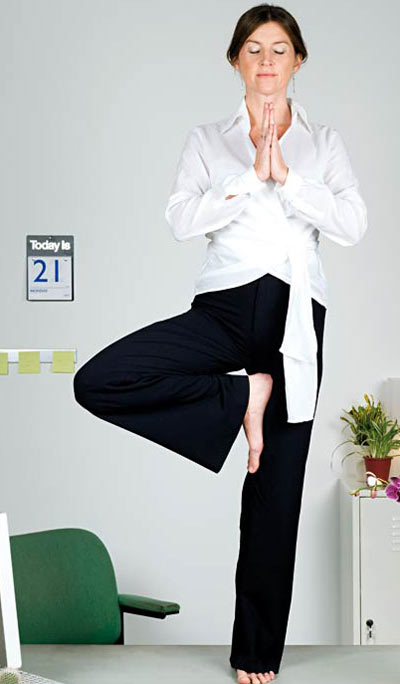
Take proactive steps to address stress before it happens; use breathing and relaxation techniques Understand your stress trigger.
- Take proactive steps to address stress before it happens.
- Use breathing and relaxation techniques.
- Reduce caffeine. Research has indicated that caffeine increases the secretion of stress hormones like adrenaline, so if you are already secreting higher stress hormones, caffeine will boost it even higher and exacerbate stress/anxiety or depression even further than it already is. By eventually cutting caffeine you will lower your stress hormone levels and therefore reduce stress, anxiety and depression.
- Reduce alcohol. Alcohol, when consumed in large amounts, stimulates the hypothalamus, adrenal and pituitary glands and one result of this is an increased level of both cortisol and adrenaline within the body. But both play a significant role in reinforcing the symptoms of stress.
- Quit smoking. Contrary to popular belief, smoking does not help to combat stress. In fact, it can make stress worse and it causes damage to your body.
- Eat a well balanced diet. It is essential, both to avoid direct physical stress caused to the brain and nervous system, and to reduce stress susceptibility resulting from poor health.
Firm role
 Stress in the workplace reduces productivity, increases management pressures, and makes people ill in many ways, evidence of which is still increasing. Stress at work also provides a serious risk of litigation for all employers and organisations, carrying significant liabilities for damages, bad publicity and loss of reputation.
Dealing with stress-related claims also consumes vast amounts of management time. So there are clearly strong economic and financial reasons for organisations to manage and reduce stress at work, aside from the obvious humanitarian and ethical considerations.
An alarming amount of absenteeism in the workplace is now stress-related and it is clear that problems caused by stress have become a major concern to both employers and employees. Symptoms are manifested both physiologically and psychologically. Persistent stress can result in a range of problems, including frequent headaches, stiff muscles and backache. It can also result in irritability, insecurity, exhaustion and difficulty concentrating.
Stress can also lead to eating disorders, increased smoking, excessive caffeine and increased alcohol consumption. These, in turn, will perpetuate depression and mental illness, so the vicious cycle of negativity continues.
The impact of absenteeism on the economy is colossal. However, another important area to consider is that of presenteeism. In contrast to absenteeism, presenteeism is when employees come to work in spite of illness which can have similar negative repercussions on business performance.
A depressed economic climate and the threat of redundancy can put people under considerable pressure to come into work. However, work performance is impaired, expensive mistakes are made and this can have serious repercussions.
I remember a few years ago working for an organisation that put a great deal of pressure on their staff to perform. Little was put in place to protect the wellbeing of the people, and illness and absenteeism went through the roof. We were not allowed to use the term stress because apparently this was self-induced and, to a degree, that can be the case. However this, of course, is not always the case and, there are many different things that can trigger stress.
If organisations take a more responsible approach and individuals take a more proactive
approach to personal stress management, then the union of the two intentions could well improve the current rate of stress-related illness and absenteeism.
Environment

It makes sense that people who are happy within their working environment will work far more effectively and happily than those who are uncomfortable. Your work environment can also have a big impact on your stress levels. Creating an environment that is comfortable and stimulating and conducive to both physical and psychological wellbeing is so important. This will contribute significantly to that all important ‘feel good factor’ at work.
» Make your workplace physically better
Noise can be the cause of irreversible hearing damage and also lead to increased levels of stress. Noise is normally caused by loud machines so, when buying any new plant or machinery, remember to check the noise emission levels.
Take responsibility to keep your work area tidy. Always put things back where you found them. Clear up if you make a drink and be as tidy as possible. You will feel so much better and it is also much more considerate to those around you.
Visual images at work can really work well in raising morale. Positive pictures with happy faces and beautiful scenery can help to promote a good atmosphere.
Studies have shown that music in the workplace promotes positive mood, sense of team, improves alertness and can lessen the event of accidents. Obviously this needs to be appropriate as, in some work environments it would be completely unsuitable. The mood and style should fit the business.
Experts suggest all-instrumental soundtracks so that workers don’t become distracted by the lyrics. It is important to remember that your behaviour in the workplace is part of what makes the environment a good place to be. If everyone at work is happy and positive and friendly then the chances are it is going to be a much better place to be. Laughter, for example, can be a very positive environment enhancer.
Firm role
There are so many great initiatives that organisations are taking to support the environment and sharing ideas is a great idea. There will be lots of people within your organisation that may well have some great suggestions. Try to encourage your organisation to get people together to share best practice and to generally raise awareness and encourage environmental responsibility.
The best companies to work for are organisations who take responsibility and many people these days take this into consideration when selecting a company to work for.
In some organisations, posters with motivational quotes are hung up to inspire people and to reinforce a positive mental attitude.
» How to create a happy atmosphere at work
Make Friends
“Do you have a best friend at work?” Liking and enjoying your co-workers are hallmarks of a positive, happy work experience. Take time to get to know them. You might actually like and enjoy them. Your network provides support, resources, sharing and caring.
Take charge of your personal development
You have the most to gain from growing—and the most to lose, if you stand still. Take charge of your own growth.
Ask for specific and meaningful help from your boss, but march to the music of your personally developed plan and goals. Learning with others can also create a great team environment.
Take responsibility for knowing what is happening at work
Seek out the information you need to work effectively. Develop an information network and use it. Assertively request a weekly meeting with your boss and ask questions to learn. You are in charge of the information you receive.
Choose to be happy at work
Happiness is largely a choice. I can hear many of you arguing with me, but it’s true. You can choose to be happy at work. I wish all of you had the best employer in the world, however you may not. Nevertheless, thinking positively about your work and dwelling on the aspects of your work you like will help hugely. Don’t get embroiled in critical behaviour and whinging. We can all find a wealth of things to complain about if we look hard enough. Find co-workers you like and enjoy and spend your time with them. Your choices at work largely define your experience. You can choose to be happy at work.
In today’s workplace, wellness is becoming an increasingly topical issue. It is, nevertheless, important to be realistic about the extent to which organisations can support individuals and a sense of personal responsibility is essential. Work is what YOU make it and it is your attitude and approach that will have the most significant effect.
Work wonders at home
Here are a few tips that can help you if you are working from home:
- Get yourself ready, just as if you were going to an office. If you feel like a professional, you’ll work like one.
- Start the day with a clear purpose. Know what your most important tasks are.
- Set a time frame for projects/activities and keep to it work.
- Find your best hours for working—high energy, low interruptions.
- Take breaks in between tasks. Go for a short walk, get a drink of water.
- Let your family know that certain times are for work, and you can’t be disturbed for non- emergencies.
- Fit a trip to the shops into your lunch break.
- Do not do your home chores in work allocated time.
- Set yourself office hours.
- Invest in the right tools and technology.
- A good-sized desk and quality chair.
- Develop a back-up plan in case there is a hardware or internet problem, back up your hard drive regularly, know where you can get internet access if it fails at home.
- Take pride in your space. Your work area should be clean, with good light and air circulation.
- A closed door to your office is an under-appreciated asset when you have small children and pets especially if taking business calls.
- Communicate the boundaries of your space and time to your family.
Sometimes when you work from home you can feel quite isolated. If you feel lonely and need some human interaction, here are a few suggestions:
- Go out for lunch with others.
- Go to the gym at lunchtime and do a work out.
- Have a work friend who works from home too who you can call for support or to bounce ideas.
The concept of working from home and having flexibility in working hours can be a great advantage to work/life balance, it can also work the other way if you do not separate the two. Good planning, organisation and self discipline is the key to making it work well for you.
Excerpted with permission from How to Work Wonders by Liggy Webb; published by Grosvenor House Publishing Ltd.
Spot an error in this article? A typo maybe? Or an incorrect source? Let us know!