
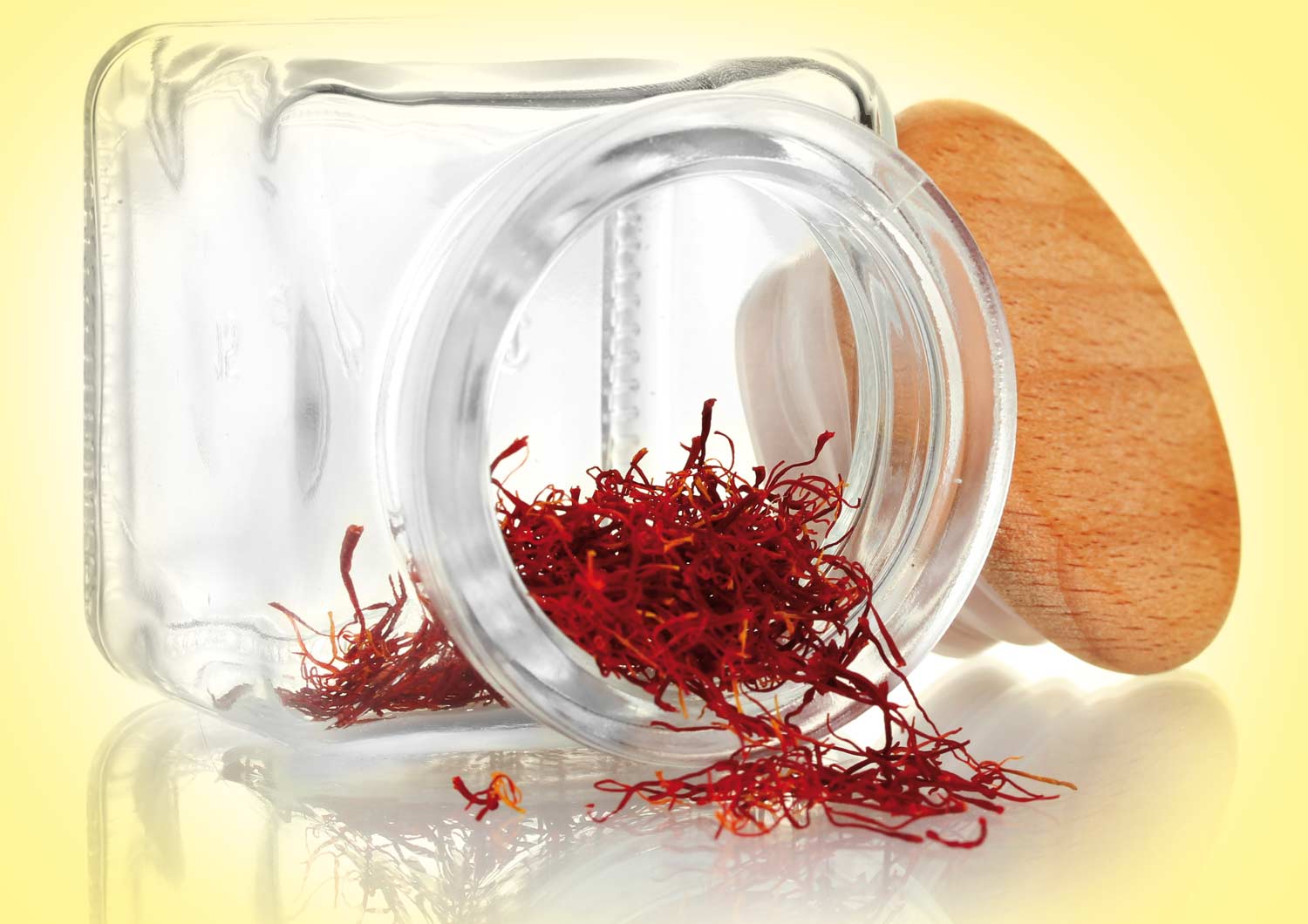
My interest in saffron or kesar came about during my first pregnancy when I was given a packet of ‘imported’ saffron by my mother-in-law. Her advice was to mix a few strands in warm milk and to drink it once or twice a week. This elixir, she said, was the secret to ensuring that my baby would have fair skin. That we Indians have as colour fixation was not news to me, but that saffron had the power to cancel out the impression of genes was what got me started on a saffron trail…
My earliest memories of saffron are of my maternal uncle giving a teeny-weeny box of Spanish saffron every year to my mother on his annual trip to India from the Gulf. This was one of the most treasured gifts that she received and used it sparingly through the year. A few strands of saffron would find their way into selective dishes [mostly sweets] that my mother cooked. Few, because the stock had to be used until a fresh stock arrived and also, very little of it was all it took to create magic in the recipe. The kheers and payasams that I remember relishing as a kid, always had a yellowish orange hue, with an occasional thread of kesar floating in it. That saffron was also used in savoury recipes likes biryanis and pulaos, was a revelation that I stumbled upon only when my own trysts with cooking began, post marriage.
My research on saffron, during my pregnancy, threw light on a lot of other aspects that I had no idea about and by the end of the nine months I had a mini-dissertation in one hand and a baby in the other!
The stigma of a flower [Crocussativus linnaeus], it is a native of the Mediterranean region. The cultivation and harvesting of saffron is a laborious and time consuming process. Each flower yields just three of these dark orange saffron threads which need to be hand-picked and separated. No surprises that saffron is the most expensive spice in the world. In India, it has been grown in the Kashmir valley since ancient times and is regarded as high grade saffron.
Known as ‘zafran’ in Urdu, ‘kumkumakesari’ in Kannada, and ‘keshar’ in Marathi, it is widely used in Indian cuisine to impart both, colour and flavour to the dish. Besides milk based sweets, curries and biryanis, saffron is also widely used across the globe in baking, making cheese and even liquors.
Watch-out while buying saffron
A 5g box of high grade saffron can cost anywhere between `1200 – 1500, making it one of the most widely adulterated spices. The cost is also one of the reasons why some restaurants and sweet shops substitute saffron with orange food colour in their dishes. When buying, be vary of sellers trying to palm off saffron at cheaper rates—you may just end up with something that contains chemical dyes instead of pure saffron. Here are some tips for buying, storing and using saffron:
- Pure saffron threads are red in colour with a slightly orange-red tip. If the thread is all red it is believed to be adulterated with red colour to look expensive.
- Saffron is graded by its colour—the deeper the red , the higher is it’s grading and cost.
- There should be no yellow or white threads, which is a sign of adulteration with other parts of the saffron flower.
- Saffron is sold as powder and as threads. The threads are supposed to be a better buy rather than the powder which also has a lesser shelf life.
- After buying saffron, store it in the refrigerator or in a cool dry place. It tends to absorb moisture rather quickly, so wrapping it in a foil and then placing in a tight fitting container is recommended.
- There are different ways of using saffron in cooking—the most common way in India is to steep the saffron threads in hot milk for about 15 – 20 minutes. This milk is then used in the dish. Other methods of using are to crumble the threads and then soak in the hot gravy of the dish itself, or in any other hot liquid like water or broth.
Culinary uses and more
While saffron is widely used in cuisines the world over, its use isn’t limited to culinary purposes. It has been used in cosmetics from ancient times and is also known to have some medicinal properties. The natural orange-red hue and fragrance of saffron has been used in different cosmetics ranging from hair oils, perfumes to skin creams. In ayurveda, saffron is used as a skin cleanser and enhancer. Saffron oil is supposed to be an astringent as well as an antiseptic and hence used for the treatment of a host of skin problems including acne, bug bites and even sores.
Besides its cosmetic use, saffron is also believed to help in reducing premenstrual symptoms and depression. There are claims in alternative medicine of saffron being used for various disorders ranging from coughs, colds, asthma to diabetes. It is also known to stimulate the appetite and used as a diuretic. Researchers are studying the possible antioxidant effects of saffron [it is a rich source of carotenoids] in treating cancers and even heart diseases.
Since it is so expensive, side-effects due to overdose are rare. However, here’s a word of caution for the women: Excessive consumption of saffron during pregnancy can cause miscarriages, as it is known to stimulate contractions in the uterus.
For those wondering if our baby turned out to be the quintessential ‘fair and lovely’ bundle of joy, let’s just say that he is the perfect blend of our genetic pools.
This article was first published in the March 2013 issue of Complete Wellbeing.
 Spot an error in this article? A typo maybe? Or an incorrect source? Let us know!
Very well curated article, especially the buying guide for Saffron. It is one of the most adulterated herb and a lot of confusion lies during its authenticity.
Keep it up..!