
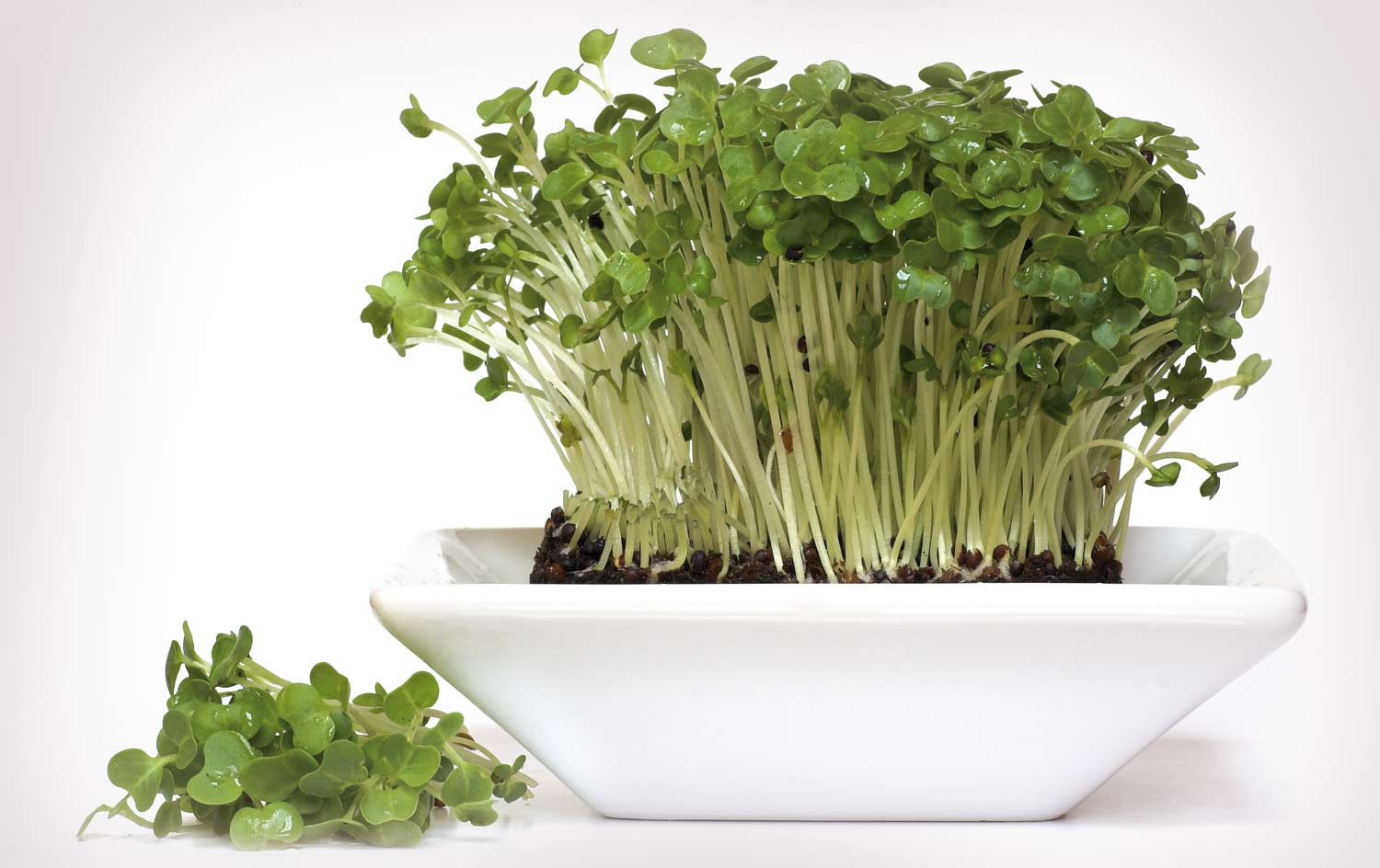
Garden cress [commonly known as aliv in Marathi or halim in Hindi] is a green, cool-season perennial plant used as a leafy vegetable, typically used as a garnish. Undisturbed, the plant can grow to a height of two feet with minimal maintenance. When mature, garden cress produces white or light-pink flowers, and small seed pods.
How to use and store it
Both its leaves and stems can be eaten raw in salads or sandwiches, and are sometimes called cress sprouts. When buying cress, look for firm, evenly coloured, rich green leaves. Avoid cress with any signs of slime, wilting, or discoloration. If stored in a dry plastic bag or container, it can last up to five days in a refrigerator. To prolong the life of cress, place the stems in a glass container with water and cover them, refrigerating the cress until it is needed.
Health benefits of garden cress
It is an important source of iron, folic acid, calcium, vitamins C, E and A. The seeds contain essential fatty acids that can give you thick, shiny hair and healthy skin. The seeds are high in calories and protein, whereas the leaves are an excellent source of vitamin A, C and folate.
Sexual and reproductive health
Garden cress has mild oestrogenic properties. It helps to regulate the menstrual cycle. No wonder it’s considered as a must have for women.
Kheer made of garden cress seeds increases milk production and secretion in lactating mothers. Before using the seeds be sure to soak them in water or milk for 2-3 hours. This enhances the taste. Because of its high iron and protein content, it is often given to lactating mothers.
It also helps to improve libido [and this works for both, men and women!]
For the digestive system
It helps purify blood and stimulate appetite. If you suffer from constipation, make sure to add the cress to your diet.
Paste made of the seeds can be had with honey to treat amoebic dysentery.
Garden cress crushed and had with warm water is beneficial to treat colic, especially in infants.
For the respiratory tract
Garden cress seeds are good expectorants. Chew on them to get relief from sore throat, cough, asthma and headache. The aerial parts are used in the treatment of asthma and cough.
For anaemia
Garden cress seeds being the richest source of non-haeme iron [an easily absorbed iron] help to increase the haemoglobin levels. When taken regularly, it can reduce anaemia and bring the blush back to your cheeks.
Have some form of vitamin C [citrus fruit or supplement] half an hour after consumption of these seeds as it enhances iron absorption.
For cancer
Garden cress seeds contain antioxidants like vitamin A and E which help protect cells from damage by free radicals. Hence, these seeds can reduce the intensity of side-effects of chemo.
For other things
Halim seeds are memory boosters because they contain arachidic and linoleic acids. They help gaining lean body mass because they are a good source of iron and protein. Research has proved that 60 per cent women have hair loss due to low iron levels and poor protein. A teaspoon of garden cress seeds soaked in lime water helps in iron absorption, which in turn strengthens hair. The plant is also used in treating bleeding piles. The leaves are mildly stimulant and diuretic, useful in scorbutic [related to or resembling scurvy] diseases and liver complaints. A paste of the seeds with water is applied to chapped lips, and against sunburn.
Can garden cress be harmful?
Though it’s not likely that you will overdose on halim seeds, no matter how delicious you find the kheer or the laddoos, nevertheless here’s what could go wrong if you have it in excess. It contains goitrogens that prevent iodine absorption by the thyroid and hence it can lead to hypothyroidism. If large quantities of garden cress are consumed, the mustard oil it contains may cause digestive difficulties in some people who are sensitive to it. Therefore, garden cress should be eaten in moderation.
Values for 100g of garden cress leaves
| Energy | 30 Kcal |
| Carbohydrates | 5.5 g |
| Dietary fibre | 1.1 g |
| Protein | 2.6 g |
| Fat | 0.7 g |
| Vitamin A | 346 mcg |
| Folate | 80 mcg |
| Vitamin C | 69 mg |
| Calcium | 81 mg |
| Iron | 1.3 mg |
 Spot an error in this article? A typo maybe? Or an incorrect source? Let us know!
Hi,
I would like to know where to purchase these seeds from? Also, can i grow a garden cress plant and then obtain seeds from it?
gardencress has lot of phenols, how about the availability of iron and calcium
Soak about 1-2 tsp of halim seeds in enough water to soak them and they will start to get a gelatinous outer cover and become slimy.
Heat 1 cup milk, add sugar or jaggery and mix in soaked halim seeds and drink up.
Article is informative and I want to know the quantity to be taken daily and the form in which it is very effective
i want to know the exact quantity of HALIM.Is it ok if we have halim regularly 1 tblspoon morning for one month.please tell me moderate quantity of halim
Enjoyed reading
the report – most informative thanks
my mother give us on empty stomach, from the end of winter to the begging of spring, i never think it is useful like this but i like the test, she soak it over night with lime, garlic and salt. and i am happy to know what i am taking.
very impressive! i use to have egg&cress sandwich very often. so i just wanted to know whether its healthy or not.i was worrying about irregular period. but now i have it regular. and i also can control my weight ideal. thanks for the info.
Garden cress in malayalam it is AASALY, available in ayurvedic shops. I am using now for few months & found good for me.
Dear sir,
I am 52 years old male person, I have tremor in both hands,I am suffering from this problem since last ten years, now problem increased, I can’t hold a cup of tea without spalshing, please help me by suggesting herbal medicine to overcome from this disease.
Regards,
S K Sarkar
Jamshedpur
Very interesting facts about aliv. I am slightly anemic, and wonder how many grams of aliv seeds I should consume per day. Should I soak them for some time, and eat them that way, or do they have to be cooked?
Sushma: I suggest you stick with your prenatal vitamins and folic acid. Too risky to take any chance at your 8th month.
HI
I am eight months pregnant and i have low hemoglobin count… I hate eating iron tablets. I read in the newspaper today about garden cress but i have no idea where to find it.I stay at Nerul in Navi Mumbai. I will be grateful if you can suggest where to find it.
Thanks
Sushma
Dear sir;
It is very informative .But what is aliv. I am south indian I am unable to find it on web too. Is it flaxseeds?
Thank you
Good article. Pls see if you can work on “Squalene” which I find has very interesting nutritional properties
Very informative article. The style is simple and lucid.
I love greens but didn’t realize they were this good for you. Thank you!!Very informative article!!! Next time, I shall look for garden cress specifically when shopping for vegetables.